The Market Has Shifted — Not Because of AI
Here is a sentence most trend articles skip: the biggest change in editorial photography this year is not a tool. It is what editors, art directors, and clients are willing to publish.
Audiences are more visually literate than ever before. Judges and curators have seen the flawless skin, the AI-enhanced skies, the „cinematic“ presets applied to every file. That accumulated exposure created fatigue — fast. The images that actually land in 2026, whether in print editorial, commercial campaigns, or long-form journalism, share one trait: they look like they were made on purpose, not optimized for approval.
This matters for working photographers more than any gear release. It means your 70–200mm f/2.8 is still the right lens for a lot of this work. It means the shot where the subject’s eyes aren’t quite open, but the emotion is undeniable, is the one the picture editor picks. And it means you have to stop protecting clients from imperfection — because imperfection is often the point now.
Authenticity Is Not a Style — It Is a Decision
Most photographers I talk to confuse authentic work with unplanned work. That is the wrong read.
A growing number of winning images look like they happened without permission — not in a sloppy way, but like the photographer knew exactly when to press the shutter without trying to control every micro-expression. Motion in the frame, half-smiles, odd angles, real tension. The kind of shot where the subject’s hands do not know what to do, or the wind destroys the hair, or the laugh breaks mid-breath. Controlled disorder. That requires planning.
Aftershoot’s 2026 industry survey put it plainly: the photography industry is moving away from highly polished, algorithm-influenced visuals toward something more human. Documentary photographer Paul Williams describes a clear shift toward real moments, intimacy, and substance over style. That shift is visible in editorial work that sells — not just in wedding or portrait photography, but in brand campaigns, feature journalism, and commercial lifestyle work.
If you are directing a subject, try this: give them something to do instead of something to be. Hands occupied with a task read differently from hands placed for a pose. That distinction shows up in the final frame.
Cinematic Visual Language: More Than a Grade
Let us clear something up. Cinematic in 2026 does not mean teal-and-orange, heavy contrast, or a specific LUT applied in three clicks.
Cinematic means photographs that feel like a scene: deliberate light, controlled mood, and a sense that something happened before and after the frame. Streaming culture has trained viewers to read film language quickly — rim light reads as drama, wide negative space reads as loneliness, haze reads as nostalgia. That visual grammar now carries over into still editorial work. Fashion campaigns, long-form magazine features, and brand identity shoots increasingly operate with this logic.
Editorial creators working on fashion campaigns are building narratives that resemble movie stills — using lighting to demonstrate personality and story, not just flatter a face. The letterbox crop is one tool here, not the whole game. What actually creates cinematic depth is light that has a reason: a hard shadow that tells you where the window is, a practical lamp that anchors the environment, a backlight that separates subject from location.
The mistake I see repeatedly: photographers grade first, then wonder why the shot looks flat. The grade amplifies what the light already did. If the light was generic, the grade just makes generic look darker.
Editorial Lighting in 2026: Flash Is Back, With Intent
Natural light dominated editorial conversations for years. That conversation is shifting.
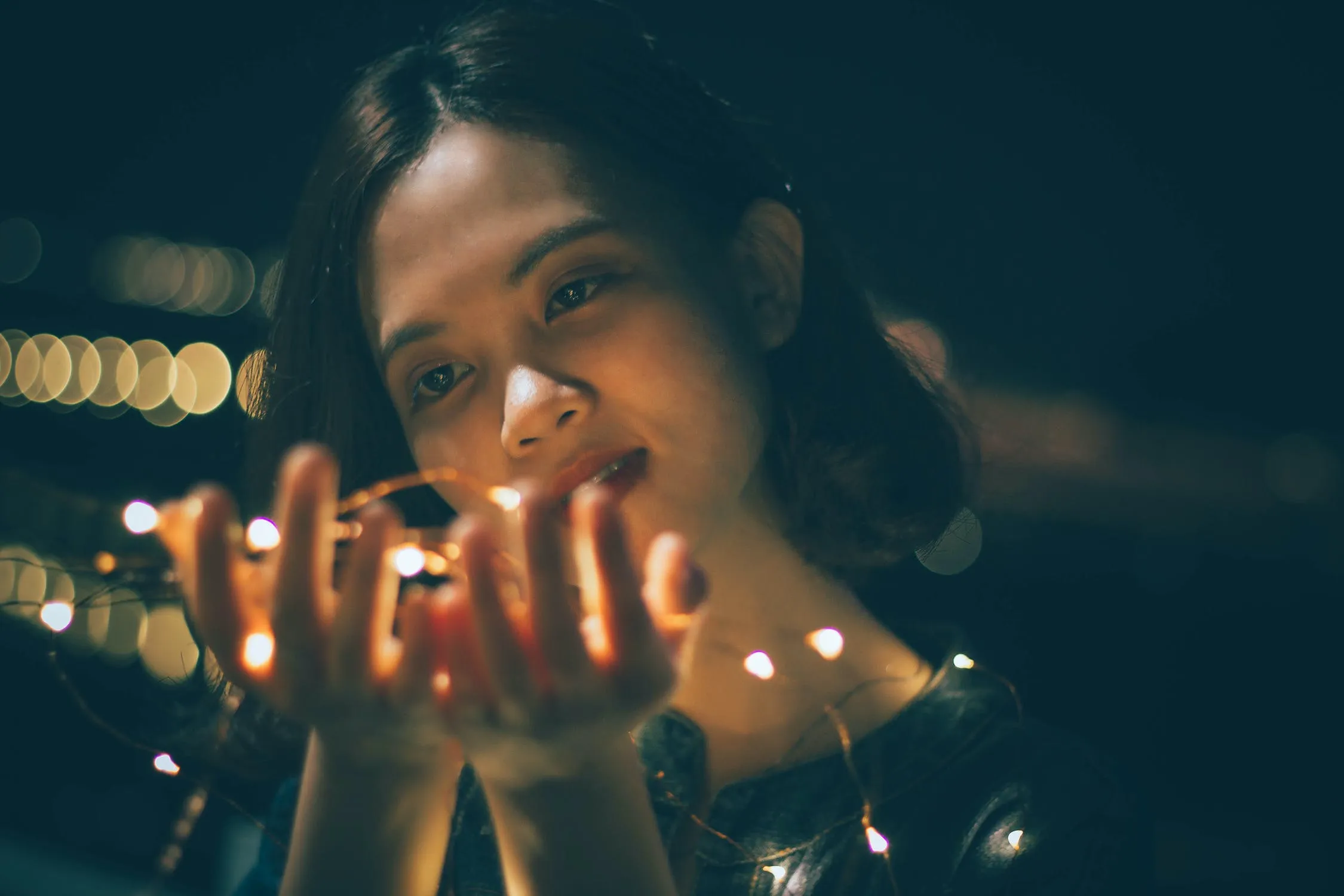
Flash and magazine-style lighting are returning in 2026 — not replacing natural light, but blending with it in specific project contexts. Direct flash, in particular, is getting serious editorial attention again — partly as a reaction to years of ambient-only aesthetics, and partly because it reads as honest. There is no pretense of naturalism with a direct strobe. It says: this is a photograph.
For commercial editorial work, the combination of a location ambient reading and a single strobe at roughly -1/3 stop below ambient consistently gives you something workable. You keep the environmental context, you separate the subject, and you avoid the overcooked look that kills editorial credibility. Strip lights at distance work better here than large modifiers up close — narrower spread, cleaner separation, less interference with background detail.
The return of vintage flash aesthetics — direct on-camera flash, party-documentary energy, 90s-editorial energy — is partly nostalgic and partly practical. Vintage flash photography and editorial street style portraits appear on the 2026 VIEWBUG trending list alongside real-moment portraits and film-inspired color grading. These are not niche references; they represent what is actually getting made and shared at volume.
C2PA and Editorial Credibility: Now a Workflow Question
This is the one development most editorial photographers underestimate. It will not stay that way.
The BBC, AP, Reuters, AFP, and The New York Times now publish photos and video with embedded Content Credentials, and run editorial guidelines that reject unsigned wire images of major news events. C2PA — the Coalition for Content Provenance and Authenticity — provides a cryptographically signed chain of custody from camera capture through editing. When an editor at a major outlet opens a submitted image, they can verify exactly what camera captured it and what edits followed.
For working professionals in photojournalism, legal documentation, or commercial advertising, this capability is transitioning from „nice to have“ to „required for the job.“ The word „authenticity“ is moving from marketing language into contract clauses. Leica, Sony, Nikon, and Canon all ship cameras with C2PA firmware in their professional lines. Camera Bits is building C2PA support directly into Photo Mechanic, which has been central to press photography workflows for decades.
What this means practically: if you shoot editorial work on a Sony α9 III or a Nikon Z6 III and maintain your edit history inside Lightroom with Content Credentials mode active, you can deliver an image with an unbroken provenance chain. That is increasingly the difference between a pitch that gets through and one that gets a follow-up question about authenticity.
Character-Rich Faces: What Editorial Casting Looks Like Now
Stock photography and editorial casting are converging on the same realization: skin texture is a selling point.
Age-positive casting is becoming standard in beauty campaigns, fashion editorials, and product photography. Canada Goose spotlighted Willie Nelson, and Saint Laurent worked with Christopher Walken — showing that character-rich faces produce unforgettable imagery. These are not small indie brands taking a risk. These are mainstream commercial decisions.
Photography in 2026 is embracing faces with history. Unconventional features, natural asymmetry, and visible texture are becoming visual assets rather than flaws to be managed in post. This is not just a cultural shift — it is a practical one. Heavy retouching takes time and money. A face that does not need retouching because the skin reads as real and dimensional is genuinely more efficient to work with.
For photographers who still routinely smooth everything in post: stop. Or at least stop doing it by default. The visual trust that comes from an unretouched laugh line is something you cannot add back in later.
Film Aesthetics With and Without Film
Photographers are integrating retro aesthetics by applying film-inspired grain and muted tones to lifestyle portraits, using vintage direct-flash techniques reminiscent of 90s party photography, and blending analog textures with modern sharpness for editorial work. What was a personal stylistic choice a few years ago is now a commercially viable delivery format.
The distinction still matters, though. A Kodak Portra 400 shot on a Mamiya RZ67 produces a gradation curve that digital simulation approximates but does not replicate exactly. Kenner photographers see it. For commercial clients who require that specific visual language, real film still commands a premium — and can be documented in the deliverables. For clients who need analog aesthetics at digital turnaround speeds, grain at roughly ISO equivalent 1600, pulled highlights, and a flat tone curve in Capture One gets you close enough.
One thing that does not work: applying a film preset to a badly exposed digital file and hoping the grain covers the noise. Grain is texture. Noise is error. They read differently.
What Editorial Photography Actually Demands in 2026
The photographers succeeding in editorial work right now are not the ones chasing every trend. They are the ones who understand that the brief has changed — from „make it look good“ to „make it feel real.“
The most competitive images in 2026 share a common trait: intentionality. Whether raw or polished, vertical or wide, film-grainy or sharp, the work should feel deliberate. Strong fundamentals — light, composition, timing — combined with a visual language that reads as honest: that is the actual deliverable. Everything else is execution.
FAQ
How do I maintain a valid C2PA provenance chain from capture through editing without disrupting my existing Lightroom workflow?
Start at capture: enable C2PA signing in-camera on any body that supports it (Sony α9 III, Nikon Z6 III, Leica M11-P, Canon’s current pro line). Import directly into Lightroom with Content Credentials mode enabled — this logs each adjustment step into a signed manifest. The critical failure point is third-party export plugins that strip metadata on output. Always verify your export settings include content credentials passthrough. For Photo Mechanic users, Camera Bits is building native C2PA support, though it was still in development as of February 2026. Until that ships, use Photo Mechanic for culling only and move to a C2PA-aware environment for editing. Preserve metadata through your CDN and CMS pipelines as well — upload or transcoding processes that strip C2PA manifests break the authenticity chain at the distribution stage.
Major outlets are now requiring C2PA-signed images for news submissions — does that mean my older camera body is becoming commercially obsolete?
Not immediately, but the trajectory is clear. For specific high-stakes sectors — photojournalism, regulated industries, high-liability advertising — provenance documentation is moving toward a contract requirement rather than an optional feature. Broader commercial markets will follow more slowly. If your primary market is editorial journalism for wire services or major publications, upgrading to a C2PA-enabled body is worth prioritizing. If you work in commercial campaigns, brand photography, or portrait editorial, you likely have two to three more years before unsigned images become a routine point of friction in client conversations.
When I pitch a documentary-style editorial story, how do I differentiate „authentic“ from simply unplanned or technically rough?
The frame has to hold up on its own terms — which means the technical foundation still matters. An out-of-focus image where the missed focus was intentional and adds to the emotional read is an editorial choice. An out-of-focus image where the autofocus just failed is a mistake. The difference is visible to any picture editor. The shift toward documentary-style work does not mean abandoning technical control — it means subordinating technical perfection to emotional truth. Know your equipment well enough that when you choose to break a rule, it reads as deliberate. Shoot with a zoom that lets you maintain physical distance from your subject — 70–200mm is still the standard for this reason — and work in burst mode during peak moments. The keepers reveal themselves in the cull.
Cinematic color grading and film aesthetics are everywhere. How do I build a consistent visual identity without just looking like everyone else using the same presets?
Start from the light, not the grade. Your grade should be a thin layer over what the light already established — not a correction for flat light or a shortcut to mood. Develop a specific palette you return to across projects: one highlight tone, one shadow tone, a consistent treatment for skin. In Capture One, build that as a named style and apply it as a starting point, not a finish. Then diverge intentionally for individual shoots. The real goal of cinematic visual language is story plus control: a consistent palette, a clear subject, and lighting that feels purposeful. Presets applied without that foundation produce images that look the same as a hundred other images using the same preset. The photographers who have built recognizable bodies of work in this space are not using different tools — they are making different decisions before the shoot.